Steam Extraction vs Dry Vacuuming
Mechanism, removal depth, cost and time difference — when dry vacuuming is enough versus when extraction is necessary.
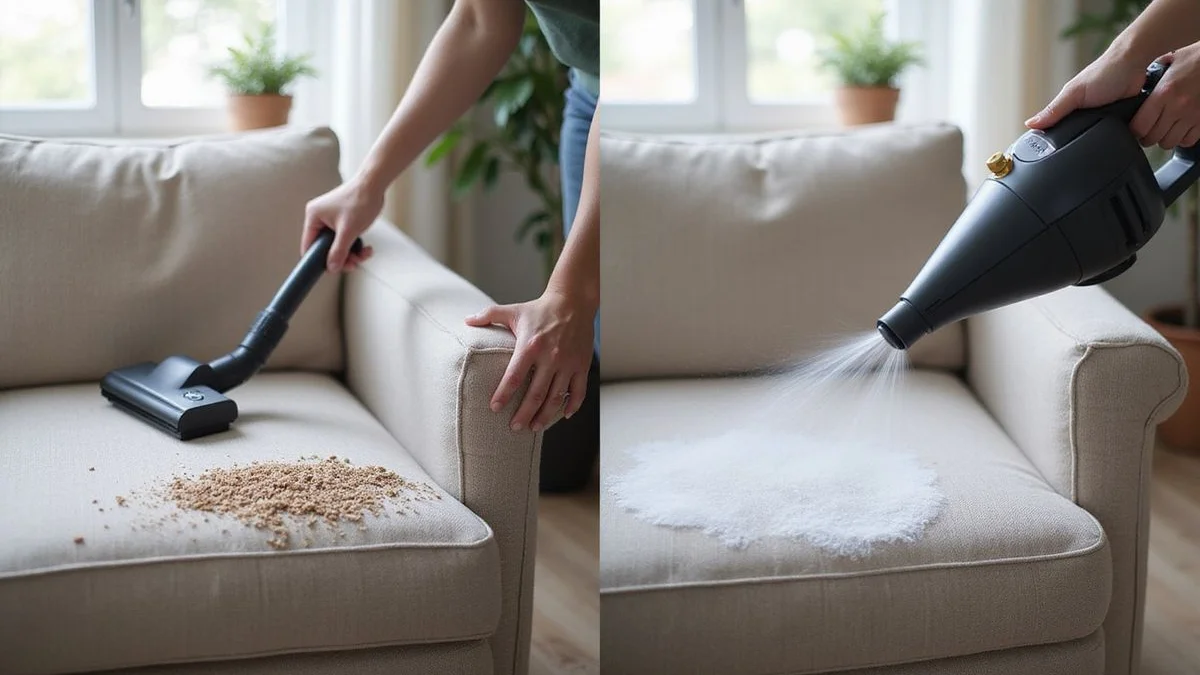
We always tell our clients in Selangor that cleaning a sofa requires a two-step approach. Dry vacuuming removes loose surface debris, while steam extraction pulls embedded dirt from deep inside the cushion.
Our team recommends treating these methods as a maintenance pair rather than opposing choices. This guide explains what each does, when each is enough on its own, and how to think about the combined cost. Let’s look at the data to help you decide on the right care routine.
It all comes down to understanding your fabric’s specific needs.
What each method actually does
Each technique targets a specific layer of upholstery dirt to keep your furniture sanitary. Dry vacuuming handles the top layer, while hot water extraction tackles the core.
Our experts often field questions about steam extraction vs dry vacuuming. The answer lies in understanding the mechanics of both systems.
Dry vacuuming
Our technicians start every job with a thorough dry vacuuming session to remove loose particles. Standard household vacuums use cyclonic or bagged filtration to pull dirt through a filter. HEPA-rated models step this up by capturing fine particulate down to 0.3 microns.
We find this step crucial for dealing with the local Dermatophagoides pteronyssinus, the most common dust mite species in Malaysia. Regular suction removes their food source and dead bodies from the fabric surface. The physical limits of suction mean you will inevitably leave microscopic threats behind.
What it removes:
- Surface lint and fabric pills
- Loose hair (human and pet)
- Surface dust
- Crumbs and small debris
- Top-layer dead dust mites and excrement
What it can’t reach:
- Cushion core deeper than the surface (maybe 1cm to 2cm at best)
- Trapped particulates in the foam matrix
- Biofilm (microbial accumulation in damp fabric)
- Dust mites and their excrement deep in the cushion
- Embedded oils and stains
- Allergen particulates suspended in the fabric
Hot-water / steam extraction
Our industrial extractors inject 50°C to 60°C water mixed with a pH-balanced solution directly into the upholstery. The machine immediately vacuums the liquid back out under high suction. This hot water carries trapped particulates, allergens, and oils away with it.
We rely on this method because scientific studies confirm that dust mites die instantly at 54°C. Professional steam cleaning reduces allergen concentrations by up to 86.7 percent, making it highly effective for homes in Ampang.
What it removes:
- Everything dry vacuuming removes
- Cushion-core particulates (down to 5cm to 10cm depending on foam density)
- Trapped allergens and dust mite waste at depth
- Biofilm (the warm water breaks the moisture bond)
- Embedded oils
- Most stains
- Microbial life at temperature (mites die above 50°C)
What it can’t do:
- Recover sun-damaged or aged fabric
- Reverse permanent stains (some dyes, blood after extended sitting)
- Fix structural sagging or compressed foam
Cost and time comparison
Professional hot-water extraction costs around RM180, whereas a basic dry vacuuming session ranges from RM60 to RM120. A quick DIY vacuum is virtually free but takes your time weekly.
Our pricing reflects the advanced commercial equipment required for a deep flush. The table below breaks down the typical investment for a standard three-seater fabric sofa.
| Method | Time | Cost |
|---|---|---|
| Dry vacuum (DIY) | 15-20 minutes weekly | RM0 (you own the vacuum) |
| Dry vacuum (professional, intensive) | 1-2 hours | RM60-RM120 |
| Hot-water extraction (professional) | 1-2 hours on-site + drying | RM180 |
Drying time after extraction adds 4 to 12 hours of non-use. Vacuuming has no drying time.
When dry vacuuming alone is enough
Surface vacuuming provides the right level of care for brand-new furniture or items in guest rooms with low traffic. Regular suction keeps daily dust from settling deep into the fabric core.
We suggest relying on dry methods during the first six to twelve months of owning a new sofa. Ampang homeowners dealing with nearby construction dust should stick to a strict weekly schedule. A quick pass prevents heavy particulate from grinding into the weave.
Our team created this checklist for when vacuuming is sufficient:
- Brand-new sofa in light use: A weekly vacuum is fine for the first 6 to 12 months.
- Guest room sofa rarely sat on: You can schedule an annual extraction with weekly vacuuming elsewhere.
- Showroom-style display piece: Minimal use means minimal cleaning needed.
- Outdoor or covered piece: These items require a completely different cleaning regime.
For these specific items, a monthly or weekly vacuum forms a solid maintenance routine. Annual extraction remains optional in these cases.
When extraction is necessary
You must book an extraction when odors persist, stains appear, or allergy symptoms flare up. Vacuuming simply cannot solve these deeper issues.
We step in with hot water extraction the moment surface cleaning fails to restore the fabric. Several specific situations require an immediate deep clean.
The sofa shows compression and discolouration
Vacuuming cannot restore a faded or flattened appearance. The dirt sits inside the foam, not on the surface.
We see many cushions lose their shape when heavy soil compresses the foam density. Hot water extraction lifts those embedded particles out of the 5cm to 10cm depth range.
Persistent smell after airing
Sofa odour that does not clear with airing indicates biofilm growth in the cushion core. Vacuuming does not reach this bacterial layer.
Our clients in Selangor face average humidity levels above 80 percent, which accelerates mold and biofilm growth. Extraction physically breaks the moisture bond and flushes the bacteria away.
Allergy or asthma symptoms when sitting
Vacuuming holds back surface allergens, but the real trigger lives deep in the cushion. Dust mite feces contain proteins that easily become airborne when you sit down.
We recommend extraction because it reduces this deep-seated allergen load by 70 to 90 percent. High temperatures dismantle the proteins causing your reactions.
Visible biofilm or stain rings
Stains that survive a standard vacuuming session are prime candidates for extraction. Sweat, spilled drinks, and food oils bind tightly to fabric fibers.
Our industrial equipment uses a pH-balanced solution to dissolve these chemical bonds. The high-pressure suction then pulls the discoloration out completely.
Pet on the sofa
Pet hair vacuums off the surface easily enough, but dander and saliva proteins embed straight into the cushion. Tracked-in soil from outside compounds the problem quickly.
We advise pet owners to schedule an extraction every six to nine months. This frequency prevents organic matter from breaking down and ruining the upholstery.
After illness in the household
Vacuums do not have the ability to sanitise a contaminated surface. Hot-water extraction at 50°C to 60°C actively kills surface microbes.
Our health protocols suggest a deep clean after any bout of flu, gastro, or contagious illness in the home. The heat acts as a powerful, chemical-free disinfectant.
The maintenance pair
The ideal cleaning schedule combines weekly dry vacuuming with a professional hot-water extraction every six to twelve months. This balanced approach protects your investment and keeps your home sanitary.
We always suggest keeping a damp microfiber cloth handy for immediate spot incidents. Here is the routine that works best for most homes:
| Frequency | Method |
|---|---|
| Weekly | Surface vacuum (HEPA preferred) |
| Spot-incident | Damp microfiber wipe |
| Quarterly | Surface vacuum with detail nozzle on edges and creases |
| 6-12 months | Hot-water extraction |
This pairing maintains your surface appearance daily and restores depth cleanliness annually. People frequently search for the benefits of a deep clean vs vacuum sofa routine, and the answer is always this combined strategy.
Why the price gap is real
Professional equipment and trained technicians justify the RM180 extraction fee. Consumer vacuums lack the power needed for a true deep clean.
Our commercial hot-water extractors represent a RM5,000 to RM10,000 equipment investment per unit. The price covers a highly calibrated machine running at 120 to 200 PSI. Standard hardware store rentals cannot match this pressure without damaging the fabric.
The fee also covers several hidden operational costs:
- Pre-treatment enzymatic solution
- pH-balanced cleaning solution
- Equipment fuel and maintenance
- Trained operator who understands proper technique
- Pre-test and patch-test protocol
- Insurance against fabric damage
- 1-2 hours of on-site time
We use machines designed specifically for upholstery, which feature over 130 inches of water lift for maximum suction. This specification ensures your sofa dries in hours rather than days.
DIY extraction equipment
Renting a consumer extractor costs RM50 to RM150 daily, but these machines carry higher risks of fabric damage and mold. Household tools cannot match professional heat and suction.
Our team regularly fixes sofas left soaking wet by underpowered DIY machines. You can buy household-grade extractors for RM800 to RM2,500.
These consumer-grade machines do work, but they come with significant limitations. Bissell or Vax units often deliver under 100 inches of water lift, which leaves cushions dangerously damp.
We warn clients about the following DIY risks before they attempt an extraction themselves:
- Wrong-fabric-wrong-method damage (see fabric guide)
- Insufficient extraction creates damp rings and biofilm
- No insurance if something goes wrong
- Drying time often longer because home extractors have lower suction
For mattresses specifically, professional hot water extraction vs vacuum limits become obvious. Professional extraction at 50°C to 60°C makes a measurable difference against dust mites compared to the cooler water of household machines.
When you are ready for a proper deep clean, Book hot-water extraction or see fabric-by-fabric guidance.
Related service
Sofa, Mattress & Carpet Cleaning
Hot-water and steam extraction for sofas, mattresses and carpets - removes dust mites, allergens and trapped odours that surface vacuuming leaves behind.
Learn about Sofa, Mattress & Carpet Cleaning